
Monmouth Medical Center shared governance empowered frontline nurses to create a COVID-19 Nurse Liaison Task Force, bridging communication between patients, families, and healthcare teams.
Best Practice: COVID-19 Nurse Liaison Task Force at Monmouth Medical Center
The COVID-19 Nurse Liaison Task Force at Monmouth Medical Center (MMC) was created by frontline nursing staff led by Lauren Fleming, MA, BSN, RN-BC, Long Branch, NJ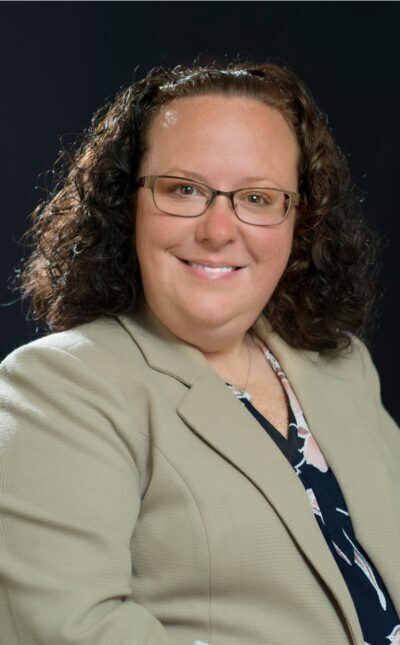 . Lauren is a staff nurse and the former chairperson of the Patient Care Coordinating Council, and former chairperson of and current consultant to the Medical-Surgical Shared Governance Council.
Background: Communication Challenges During the Pandemic
A diagnosis of COVID-19 makes it difficult for family members to communicate with their hospitalized loved ones at most hospitals. However, the situation differs at Monmouth Medical Center (MMC), where nurses have intervened. MMC’s shared governance model empowers frontline clinicians to make team-oriented decisions at the point of care for the betterment of patients and the organization. At MMC, a needs assessment revealed an obligation to restructure the organization’s flow of communication disrupted by recent events in our nation’s history.
Many hospitals shut down visiting hours indefinitely to protect staff, patients, and the community-at-large during the pandemic. While patients use phones and other smart devices to communicate with family, this technology is not available to some of the patient population. This gap particularly affects those with disabilities, sensory deficits, cognitive deficits, or language barriers. To remedy this, staff nurse Lauren Fleming, MA, BSN, RN-BC and other frontline nurses launched the COVID-19 Nurse Liaison Task Force. The task force bridges communication between the healthcare team, the patients, and their loved ones through a new role and structure. Lauren is the former chairperson of the Patient Care Coordinating Council, and former chairperson of and current consultant to the Medical-Surgical Shared Governance Council.
How the COVID-19 Nurse Liaison Task Force Operates
Six professional registered nurses fill a liaison role in the medical-surgical division. They operate in a designated office with telephone and computer capabilities while maintaining appropriate social distancing and infection control precautions. Each nurse has a telephone number that corresponds with their workstation, along with access to electronic medical records. The nurses clock in for eight-hour shifts, five days a week, rotating to provide full coverage every day. Schedules run in two-week increments and are relayed promptly to the nurses’ respective directors of patient care, the MMC Command Center, and the staffing department.
These nurse liaisons work directly with the designated COVID-19 units. Each nurse manages an ongoing caseload of positive COVID-19 patients and persons under investigation for COVID-19 (PUI). Importantly, they remain with their patient group through discharge or until a change in care plan. As a result, this continuity of care builds trust and rapport with the patients and their loved ones.
Communication Protocol and Patient Outcomes
In accordance with the Health Insurance Portability and Accountability Act, a designated loved one (“Point of Contact” person) is determined for each patient. Once the team obtains permission for correspondence, the nurse liaison serves as the main line of communication between the healthcare team and the Point of Contact. Nurse liaisons report directly to the Magnet Office and work with directors of patient care, unit nurse leaders, physicians, advanced practice nurses, medical residents, case managers, social workers, other healthcare providers, dieticians, and the Patient Satisfaction department on the COVID-19 units to which their patients are admitted.
Predetermined topics of discussion with Points of Contact include questions for the primary nurse, physicians, or the care team; the plan of care; medications and adverse effects; and discharge instructions. Additionally, nurse liaisons follow up with patients after discharge to ensure they were comfortable, their concerns were addressed, and recommended infection safety guidelines were understood.
Program Impact and Expansion
The main goal of this role is to enable open channels of communication in the best interest of the patient. Beyond this enhanced communication, the nurse liaison position allows the interprofessional team directly caring for COVID-19 patients to spend valuable time in the isolation rooms instead of answering multiple phone calls throughout the shift. Moreover, the position helps conserve personal protection equipment. The task force proved so successful in the medical-surgical division that it was replicated in the Intensive Care Unit.
To further share this new program, the task force presented its accomplishments and family feedback through the Patient Satisfaction department to the Patient Care Management Council and the Patient Care Coordinating Council as a model of best practice within MMC.
For more information about this best practice or to learn more about Monmouth Medical Center‘s shared governance model, contact Lauren Fleming, MA, BSN, RN-BC at Lauren.Fleming@rwjbh.org.