
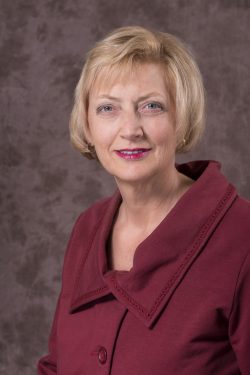
 Karen Mayer is the Director of Professional Governance Consultations for the Forum for Shared Governance and an assistant professor at Rush University College of Nursing.
Karen M. Mayer, PhD, MHA, RN, NEA-BC, FACHE, is the Director of Professional Governance Consultations for the Forum for Shared Governance. She can be contacted at karen_mayer@rush.edu.
Teaching and Clinical Roles
Karen is an assistant professor at Rush University College of Nursing, where she teaches leadership and gerontology courses in the Clinical Nurse Leader and Doctor of Nursing Practice programs. In her practitioner role, she serves as a liaison for nursing excellence for the Rush system. Specifically, she supports the ongoing efforts in meeting the standards and documentation for the ANCC Magnet® designations in all 3 hospitals. Karen also serves as a quality advisor for Lewis University.
Research and Professional Contributions
She is active in nursing research, serving as the principal investigator for a study of community support of mealtime difficulties post discharge from the acute care setting. Additionally, she serves as a site PI on a study of clinical nurse leader utilization, implementation, and outcomes. Karen chairs the Research and Awards Committee for Gamma Phi, the local chapter of Sigma Theta Tau.
She co-authored an article with the Journal of Nursing Administration on the critical role of nursing governance in the early crisis weeks of COVID-19 impact and alterations in care management. Karen has also recently published the results of a study on nursing attitudes regarding social determinants of health. Regarding strategies in optimizing nurse empowerment, her article in The Voice of Leadership, Empowerment in Action: Creating a Culture of Top-down Decision-Making, identifies a healthy ownership of nursing professional practice throughout an organization.
She served on the editorial board for the AONL Voice of Nursing Leadership publication for four years. Furthermore, she is a national speaker on topics of nursing millennial leadership, expanded roles of advanced practice registered nurses, the success of a clinical nurse leadership bedside model of care, and the expansion of clinical site availability for nursing students. Karen is also an independent contractor as an American Nurse Credentialing Center surveyor for Magnet® accreditation.
Karen’s Shared Governance Journey
Karen’s journey with nursing governance began as an intensive care unit staff RN on the night shift in an organization without a nursing governance structure. At that time, working conditions were resulting in continuous RN and nurse manager turnover in the unit. Upon becoming a co-charge RN within four months, Karen and the other night staff began meeting to establish ways to orient new staff, fix schedule gaps, re-organize the location of equipment, provide partners for patient care assignments, and build team collaboration.
The elimination of RN turnover on the night shift and positive teamwork led to Karen’s career movement into a nurse manager role, despite essentially being a new graduate nurse. Throughout her career trajectory, Karen maintained a strong respect for the critical thinking and planning abilities of front-line nurses.
Building Governance at Rush Oak Park Hospital
As chief nursing officer at Rush Oak Park Hospital, Karen fostered the initiation of a nursing shared governance structure. The first years included leadership development in front-line nurses so they could understand their roles as representatives of nurses within their department. Meanwhile, nurse administrators needed coaching in bringing clinical issues to the clinical nurses rather than finding solutions and making decisions for them.
Over time, the committee members developed meeting management skills, allowing them to become effective chairs of their nursing committees. The nursing governance Executive Committee was established with elected representative members for every nursing area of the organization. Karen then established a nursing organizational chart that placed the president of the Nursing Shared Governance Organization on even par with the CNO. The CNO served as an integral member of the Executive Committee, representing nursing administration as one of the many nursing specialties and serving as an ongoing coach of how to get things done in a complex organization system.
Karen credits the insights, expertise, and innovations of front-line nurses for all the current successes of Rush Oak Park Hospital as a top hospital. These achievements are measured by the Centers for Medicare and Medicaid, the Leapfrog Group, ANCC ©Magnet designation, and several specialty service line certifications through The Joint Commission.