Nemours Delaware Valley shared governance remained active throughout the COVID-19 pandemic, demonstrating how an engaged governance structure can energize nursing teams during a crisis.
Best Practice: How Find a New Normal with the Pandemic By Using Shared Governance
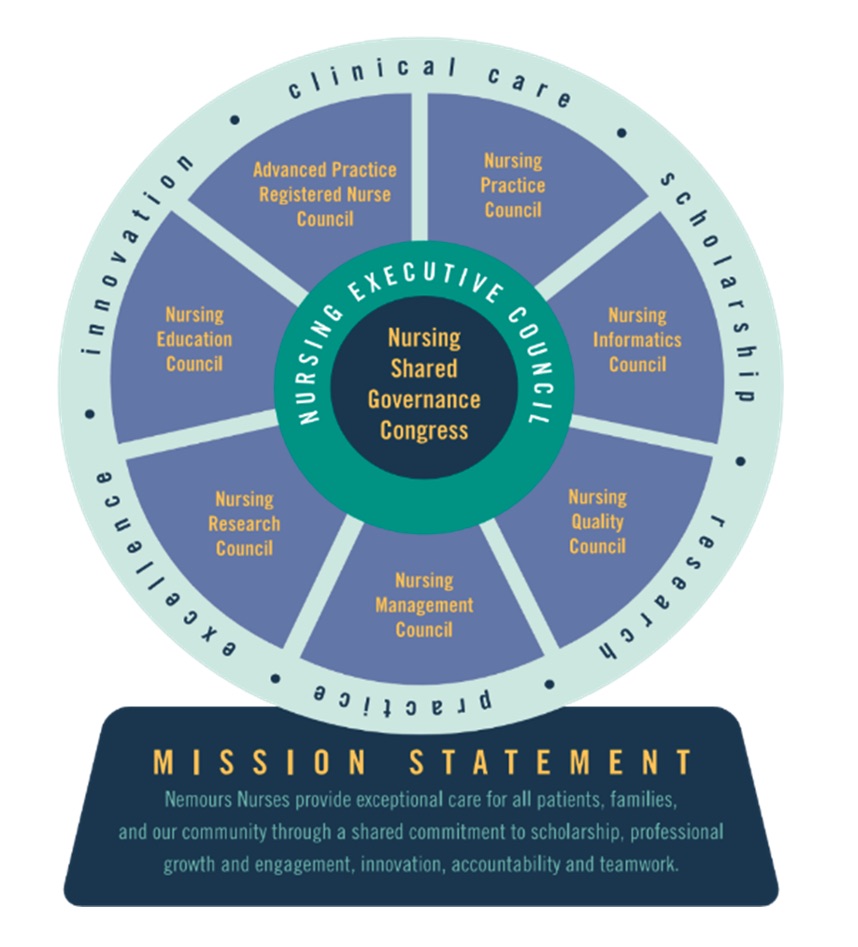
 Nemours Delaware Valley has maintained a shared governance structure since 2005. Drs. Tim Porter-O’Grady and Vicki George provided consultative support to design the combined Congress and Council structures. The structure includes a Nursing Executive Council with oversight, a Congress with two representatives from each practice environment, and seven councils that focus on practice, informatics, quality, management, research, education, and advanced practice. Approximately 300 nurses hold formal roles within the shared governance structure, serving as either Congress or Council leadership or representatives. Each group within the structure operates under bylaws that govern leadership, membership, goals, and function. In 2016, Nemours Delaware Valley scored within the range of shared governance using the Index of Professional Nursing Governance developed by Robert Hess, PhD, RN, FAAN. As a result, this organization became the first pediatric facility to earn accreditation in shared governance by the Forum for Shared Governance.
Pivoting to Virtual Governance During COVID-19
Nursing shared governance at Nemours Delaware Valley did not skip a beat during the pandemic. As information about COVID-19 spread across the county, the hospital activated an internal Incident Command and the labor pool. Meanwhile, the hospital census dipped as surgical cases were limited to emergent procedures only. The organization deployed nurses to new roles, such as Personal Protective Equipment (PPE) coaches and entrance screeners. A sense of urgency pervaded the organization, and communication became essential. The steps required to keep patients, families, and teams safe changed daily.
In response to severe restrictions on in-person meetings, shared governance forums needed a new approach. In early March, the Council Chairs that comprise the Executive Council met to determine how to proceed. The Chair of the Congress, Aimee Taylor, BSN, RN, CPN, (photo above) quickly pivoted to WebEx for the Congress and Executive Council meetings. The Council Chairs soon followed suit. Throughout the spring and into the summer, nursing shared governance meetings continued virtually. Agendas included messages from the Chief Nursing Officers (CNO) and Chief Executive Officers, rounding with leadership, information about PPE, the availability of coaches as a second set of eyes for donning and doffing PPE, and techniques to help manage stress and build resilience. Furthermore, the Practice and Education Council approved and educated staff about new practices required to maintain a safe environment. The Informatics Council helped the other councils maximize their effectiveness by hosting virtual meetings. As the Congress and Council Chairs became comfortable with the virtual meeting platform, attendance soared.
Maintaining Normalcy and Connection
Shared governance provided normalcy during the pandemic. Monthly meetings continued on as planned despite the unforeseen circumstances 2020 brought. Each month, speakers addressed current topics such as PPE, COVID exposure, and equity at the Congress. In addition, nursing leadership remained present and active at each meeting to offer updates on changing policies. The practice area representatives served as voices for all other associates, disseminating the information received to the necessary individuals.
Celebrating Nurses Week During a Pandemic
The Executive Council worked together to move Nurses Week from May to Pediatric Nurses Week in October. One of the treats that teams look forward to during Nurses Week is Sundaes on Sunday, delivered by the nursing shared governance leadership. Notably, a local news organization interviewed the emergency department team during the early days of the pandemic, and a nurse mentioned on-air that the ice-cream was her favorite part of Nurses Week. While the shared governance leadership team could not travel en mass from unit to unit scooping ice-cream, the executive council refused to let go of this tradition. Instead, the team decided to deliver individually wrapped ice cream treats with thank you notes to the entire healthcare team.
The Nursing Research Council conducted the usual annual poster fair with carefully marked six-foot spaces between the posters. Similarly, the Education Council offered a well-attended virtual panel discussion with nurses across generations talking about their shared experiences in recognition of the Year of the Nurse. The Nursing Excellence Awards program also moved to a virtual presentation, drawing more than 200 nominations — at least 10% more than ever before. Patient care areas live-streamed the awards, and hundreds attended. These awards gave the CNO and CEO an opportunity to recognize all teams for their amazing work. Ultimately, only an engaged and functioning shared governance structure that “led-through” a pandemic could create these activities that energized the entire system.