
Dawn Nebrig, a clinical social worker turned shared governance facilitator, shares her experience empowering direct care providers at one of the nation’s top pediatric hospitals. This interview is from an internal publication at Cincinnati Children’s Hospital Medical Center, which has one of the world’s premier multidisciplinary shared governance models.
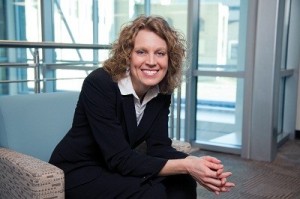
What is your title and specific responsibilities at Cincinnati Children’s?
My title is Education Consultant, and my primary responsibilities relate to my role as Shared Governance Facilitator. In this role I attend 16 shared governance council meetings a month and work with council chairs and chairs-elect as they plan their agendas and accomplish their goals and strategic priorities. One of my main responsibilities involves asking the questions that help council chairs and members identify the right people to bring together for the best decisions on professional practice and patient outcomes. That is actually the best thing about my job. I don’t need to have the right answers. Instead, I just need to make sure the people who do know the right answers—the direct care providers—are at the decision-making table.
What was your role before becoming a shared governance facilitator, and what made you decide to shift from your clinical roles?
I spent 13 years working as a clinical social worker in the Division of Adolescent Medicine, primarily doing individual and family therapy with teenagers as part of an interdisciplinary care team. I give total credit to my post-master’s fellowship in adolescent health for teaching me the value of interdisciplinary care. Essentially, it comes down to developing mutual respect and trust based on a shared understanding of what each discipline brings to the team and patient. These are learnings I use every day in my current role. My shift from clinical to staff development happened after I had kids. The hours are much better!
Why is shared governance such an important structure in the Department of Patient Services?
Shared governance is the structure that makes it possible for direct care providers to engage in system-wide decision making that affects their practices. At Cincinnati Children’s, shared governance enables each discipline in Patient Services to own their professional practice. Just as the medical dental staff provides structure for physicians to govern their practice, the SG structure enables each discipline to govern their respective practices. Without a shared governance structure, a hierarchical management structure would govern health professional practice, thereby undermining professional autonomy, ownership, accountability, and ultimately the best outcomes for patients.
Are there any “best kept secrets” about shared governance you wish all employees knew?
• Empowered, well-informed direct care providers make practice decisions that aren’t always popular with their clinical peers. I’ve met some managers who distrust the shared governance structure for decision making because they believe staff will act out of self-interest rather than doing what’s best for the patient, family, or organization. However, my experience points in just the opposite direction.
• The quickest way to reach common ground during decision-making is to keep the impact on the patient and family as the focus of the conversation.
• In councils, listening with the intent to be influenced is a fundamental skill that pays dividends. Conversely, “always being right” never will.
What’s been your proudest moment at work?
I’ve been at Children’s for 20 years, and I’ve had hundreds of pride points during that time. Most of them are pretty small, but the cumulative effect is that I love coming to work every day. I truly believe it’s the small moments we share with each other—moments that lift up, affirm, and bring us to a new level of awareness and vision for a better next, whatever that may be—that keep us engaged and eager to make a difference. Moreover, my experience of this place is that if you believe you can make a difference, you can. I’m proud of my part in that.
What do you like to do in your free time?
Hang out with my family. Working full time means that I find joy doing boring things like cooking dinner, doing homework, and watching movies on the couch. My favorite thing to say when someone asks me what I’m doing for the weekend is, “nothing!”
What’s the last great book you’ve read or movie you’ve seen?
Forks Over Knives is a documentary about the health benefits of a plant strong diet. I’ve watched it like three times on Netflix. It’s kind of changed my life, much to my kids’ dismay.
Do you have a favorite quote or saying?
The most personally empowering quote for me is from Marianne Williamson: “And as we let our own light shine, we unconsciously give others permission to do the same. As we are liberated from our own fear, our presence automatically liberates others.”
Used with permission from the Children’s Patient Services newsletter, 2013 R. Hess, RN, PhD, FAAN
All rights reserved.